Behind the Masquerade: An Interview with Author Aly Welch

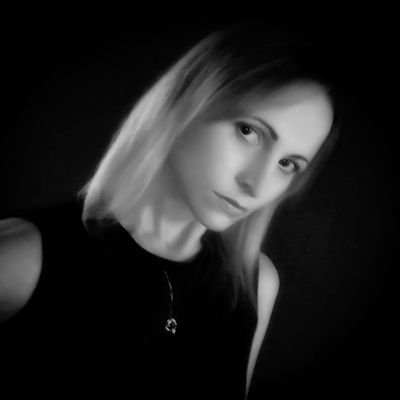
Today, I’m happy to spend some time with Aly Welch, author of the Masquerade urban fantasy series. In this series, the enigmatic leader of the Lafayette Corporation strives to inspire and protect humanity, but her interference opens the door to dark forces who feed upon our worst impulses. The world as we know it may never be the same.
The sixth book of the series, Dark Angel, just released this spring, and Aly shared some thoughts about writing and her approach to her craft.
Your new book just released — tell us a little about the story.
Dark Angel is the sixth and penultimate book in my Masquerade series. It’s an urban fantasy that starts small in the very first book when a character has her life hijacked by an otherworldly being. Over the course of the series, we find out that our world, as one character puts it, is full of more holes than Swiss cheese. The series explores themes of identity and perception through young adults that are trying to make a place for themselves in a world just as it seemingly starts to fall apart. The question becomes how do you reimagine your future when you don’t know what (or who) will be left after the dust settles.
What part of the writing process for this one felt different from your previous projects?
I had to take little mental health breaks here or there because some upsetting events occur back-to-back as the story ramps up to something big, which was daunting and overwhelming. I didn’t originally set out to write something that would become, dare I say more epic in scope, when I wrote the first or even second book. I like short stories because they can be tight and concise. A series has a lot more moving parts so the challenge is fitting the pieces together in a way that makes sense and is enjoyable but surprising for the reader.

Every writer has a moment when a draft finally “clicks.” What was the turning point for this book?
It’s hard to pick a precise moment. It was more like, I made this bed and now I have to lay in it. And why did I build it over a pit of snakes and who lit the room on fire?
How do you approach building characters who feel real without relying on tropes or shortcuts?
I usually start with a loose idea, and the characters reveal themselves to me over time. We get to know each other as events unfold. And sometimes I think they’re one thing and they end up being another, but somehow it tracks. I also aim for minor characters to be impactful, even if they’re only around for a single scene. It’s also important that the characters are shaped by the events of the story and other characters so who they are at the start may be different than who they become as the story progresses. The trick is ensuring those character developments feel earned and make sense.
Looking back at your earlier work, what’s one way you’ve grown as a writer that you’re proud of — and one way you’re still pushing yourself?
I can be impatient, so I’d get a big idea but not flesh it out or develop the plot and characters as richly as I could have. Especially since I was originally drawn to the brevity of short stories. Writing my first novel forced me to dig a little deeper, and my short stories became stronger for it. Now I need to find a way to tighten my novels without sacrificing length to measure up to my favorite short stories.
What do you hope readers feel or understand differently after finishing this book?
I hope the parts that made me laugh make them laugh. I hope the parts that broke my heart shatter theirs, but I also hope they don’t get mad at me too much and stick around for book seven. If they’ve stuck with me so far, they already know the importance of family to this story, especially the family you choose, and second chances and new beginnings.
Many writers struggle to protect their creative time. How do you carve out moments for your writing without letting the rest of your life unravel?
I work in education, so I devote my summers to writing. I wake up. I shower (which is when I do some of my best brainstorming). I eat breakfast. Then I get to work. For someone with ADHD who used to write in random spurts, especially late at night, it felt important for me to build a more consistent routine so I based it on my regular work schedule…but towards the end of any project, I tend to do those late night spurts in addition to the daily routine because I’m excited but also ready to be done and send it off for developmental editing.
Every writer hits moments of doubt or fatigue. What keeps you coming back to the page, even on the days when the words aren’t cooperating?
I had to let go of perfectionism. I spent two decades stuck on my “magnum opus”, which has seen multiple false starts, but it’s unrealistic to think you can do your best work straight out the gate. People talk a lot about ADHD and creativity, but we still have to hone our skills. Natural talent isn’t enough. You have to get things done, even the parts that aren’t as fun, to get better. I also learned that the biggest cause of writing block for me is having other things on my mind. So, I need to journal about whatever is getting in the way of the story I want to tell.
What’s the most unexpected place you’ve ever solved a plot problem — and did anyone around you notice the moment you figured it out?
Once I asked my husband to take dictation and email me because I had a big “aha!” moment in bed when I was half asleep and didn’t want to open my eyes. He was still fully awake, just to clarify. I’m not a monster. I can’t even remember what the note was, just that it happened.
Writers are navigating a rapidly changing landscape with AI tools emerging everywhere. What do you think is most important for authors to keep in mind as the technology evolves?
I’ve seen a lot of authors worry that they need to change their writing style to avoid accusations of AI, and it’s just…no. You are not the problem. You don’t need to change. A lot of people making the accusations are basing it off vibes or industry formatting standards we all must follow. Just do your best work and let the chips fall where they may. That said, if you use AI for your cover or bot farms for promotion, people will be understandably skeptical.

And let’s end with something a bit fun… If your writing routine were a personality, how would your friends describe it — chaotic genius, disciplined monk, caffeinated gremlin, or something else entirely? And why?
My office may look like it’s inhabited by a caffeinated gremlin, but you’re more likely to find a collection of protein shakes or sparkling water on my desk than you are coffee. And my novels probably read like a drunken squirrel chucking acorns at the keyboard, but weirdly, I’m a disciplined monk. I hide the squirrel under my robe.
About Aly
Aly Welch lives in Western New York with her husband, author Mike X Welch, and their twin sons. When she isn’t writing, she enjoys acting, karate, and yoga. She also loves exploring the woods and still hopes to find magic behind every tree and under every rock.An earlier version of “Alpha” appeared in the Writing Bloc Deception anthology. It leads her personal story collection Silly Little Monsters. Other stories “The Patriarch” and “Just Desserts” can be found in the Writing Bloc Family (available now) and Mythos (May 31, 2023) anthologies.
Her debut novel was the urban fantasy A Better Me. And, as she notes on her web site, if the writing thing doesn't work out, her backup plans include ninja, rock star, or international jewel thief.
You can follow her at alycatwelch@instagram or check out her website: www.alywelch.com.
Gremlin photo courtesy of Chris Carzoli at Unsplash.com.


Comments